
SAP Sales Order Automation for Distributors — Stop Re-Keying Orders Into SAP
SAP sales order automation and business process automation for legacy SAP environments
RINKT intercepts customer orders from email and automatically creates validated SAP sales orders — no SAP changes, no re-keying, no errors.
RINKT is purpose-built SAP sales order automation software for UK distributors. Our SAP sales order automation solution connects directly to SAP ECC 6.0 and SAP S/4HANA, automatically converting inbound purchase orders — from email, EDI, or PDF — into confirmed SAP sales orders without manual re-keying. Whether you process 50 or 5,000 orders a month, SAP sales order automation with RINKT eliminates data entry errors, accelerates order confirmation, and frees your team to focus on customers rather than keyboards.
★★★★★ Trusted by distributors across the UK and Europe processing 500–5,000+ orders/week
Manual Order Entry Is the Last Bottleneck in SAP
SAP was never designed to handle unstructured orders.

Why This Problem Persists in Legacy SAP Environments
SAP solutions work when inputs are clean and standardized.
But customer orders aren't.
Changing SAP to fix this creates risk most teams won't accept.
Intercept Orders Before They Reach SAP
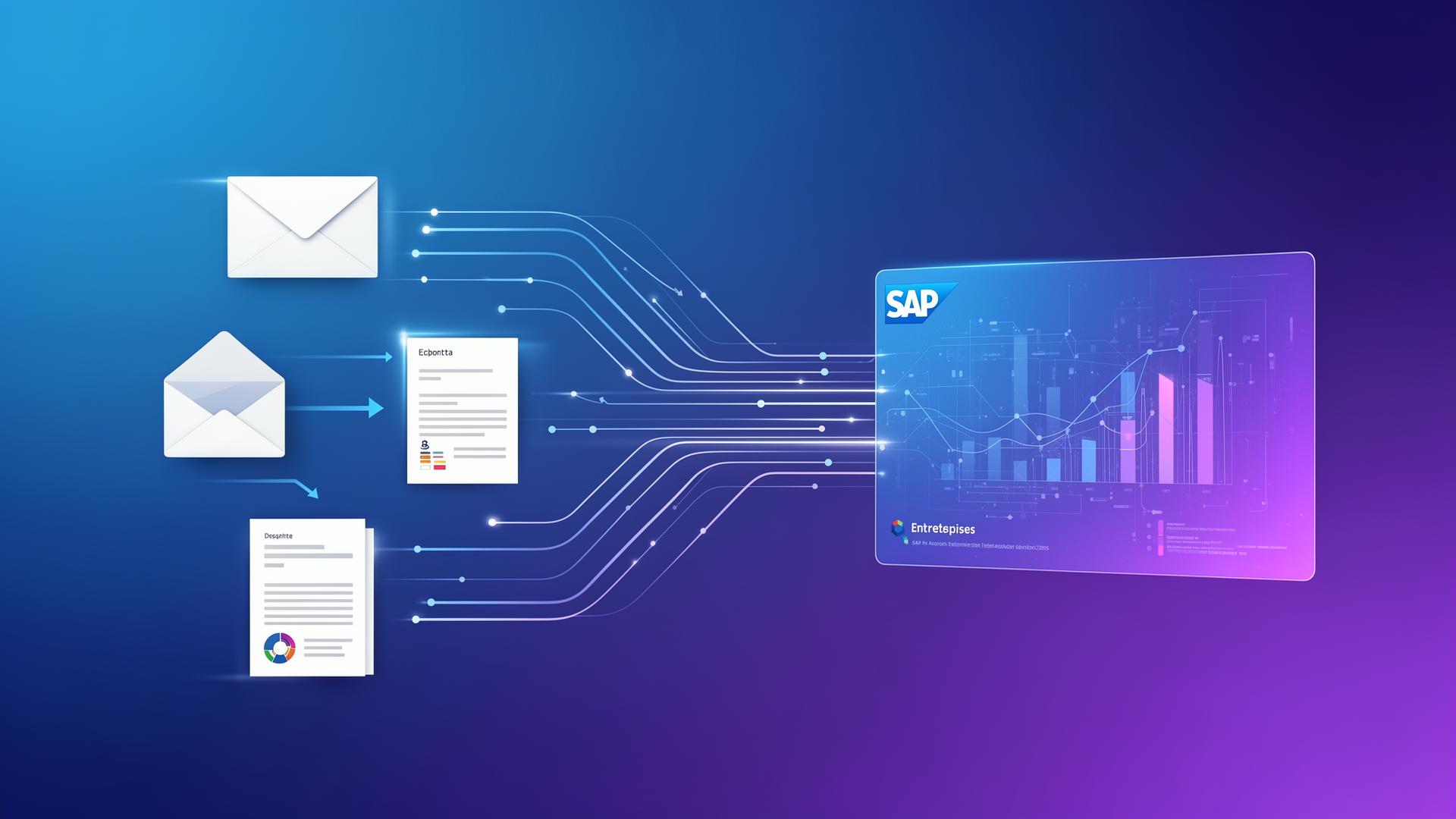
We sit upstream of SAP. We intercept, interpret, and validate unstructured customer orders before they reach the ERP — without modifying SAP in any way.
Orders Arrive
Orders arrive via email or chat
AI Interprets
AI interprets and normalizes the request
Validation
Confidence scoring + human approval where required
SAP Ready
ERP-ready sales order sent to SAP

SAP remains untouched.
What Customers Achieve


Faster order processing
Reduction in order errors
Order volume, same team

"My experience working with RINKT has been excellent. The team were highly professional, easy to collaborate with and provided outstanding support throughout the integration process, as well as ongoing aftercare. The implementation has delivered clear business benefits, significantly improved response times while enabling our team to dedicate more time to meaningful customer interactions. Overall, the collaboration with RINKT has enhanced both operational efficiency and customer experience."
Diana Amaro
Head of Order Management, Ideal Bathrooms
From Email to SAP Sales Order — Automatically
RINKT is purpose-built as an EDI alternative for SAP, designed for distributors whose trading partners send purchase orders by email rather than structured EDI messages. Our SAP sales order automation handles email-to-SAP sales order conversion for SAP ECC, S/4HANA, and SAP B1 order automation use cases — without requiring trading partners to invest in EDI mapping or VAN connectivity. The result is order processing automation for distributors that reaches production fast, without IT risk.
Scale order volume without scaling headcount.
For a deeper look at how SAP order intake automation plays out in practice, see our procurement automation case study for a UK trade supplier or read how we work with broader trade distribution automation clients.
Ready to stop re-keying orders into SAP?
Enter your work email and we'll confirm whether RINKT is a fit for your environment — before any technical engagement.
No SAP changes required · Responds within 1 business day
Prove It in 45 Days — No SAP Risk
Pilot Includes
- One business unit
- Email orders only
- One order type
- Human-in-the-loop
- No SAP transports
- Fixed scope & timeline
Request Your Pilot
Tell us about your SAP environment. We'll confirm fit before any technical engagement.
Is This Right for You?
Good Fit
- SAP ECC or S/4HANA
- High-volume email orders
- Manual re-keying today
- Legacy or heavily customized SAP
- Order management team spending 3+ hours/day on manual entry
Not a Fit
- Clean EDI-only orders
- Willing to redesign SAP
- Looking for generic RPA
- SMB order volumes
- Fewer than 50 orders per week
Built for SAP — Deployed Beyond It
We focus on SAP because it's the most complex and risk-sensitive environment.
Since we sit upstream of the ERP, we've also deployed this approach with other legacy ERPs — without modifying them.
SAP first. Always.
SAP Systems We Work With
RINKT's SAP order intake automation sits upstream of the ERP — which means it works with any SAP environment without modification. We have deployed this approach with the following SAP systems.
SAP ECC 6.0
The most widely deployed SAP version in UK manufacturing, distribution, and services organisations. Our upstream approach works with ECC 6.0 without requiring upgrades or transports.
SAP S/4HANA
For organisations that have migrated to S/4HANA, our order intake layer integrates cleanly without touching the HANA configuration or requiring Fiori customisation.
SAP Business One
Smaller and mid-market SAP deployments often have even fewer options for handling unstructured order inputs. Our solution applies equally well to SAP Business One environments.
How Email-to-SAP Automation Works
A technical walkthrough of the order processing pipeline — from unstructured email to validated SAP sales order.
Order capture from email and attachments
Customer orders arrive via email — plain text, PDF attachments, or Excel files. The system monitors the designated inbox continuously and extracts each incoming order for processing. No manual triage is required.
AI interpretation and field extraction
A fine-tuned AI model reads the order content and extracts the key fields required for SAP: customer reference, product codes, quantities, delivery address, requested delivery date, and any special instructions. The model handles format variation across customers without requiring templates.
Product and customer matching against SAP master data
Extracted data is matched against SAP customer master records and material master data. Partial matches, alternative product descriptions, and customer-specific SKU references are resolved using configurable matching logic.
Confidence scoring and human review routing
Each order is scored for processing confidence. Orders above the configured threshold are automatically progressed. Orders below threshold — those with ambiguous fields, unresolved matches, or missing data — are routed to a human operator with the extracted data pre-populated for review and correction.
SAP sales order creation
Validated orders are submitted to SAP as complete sales orders via standard SAP interfaces. No SAP transports, modifications, or API customisation is required. SAP receives a clean, structured order as if it had been manually entered by an experienced operator.
Confirmation and audit trail
Order confirmations are automatically sent to the customer. Every order — successful, reviewed, or rejected — is logged with the source email, extracted data, confidence score, action taken, and SAP order reference. This creates a complete audit trail for dispute resolution and performance reporting.
Common SAP Order Intake Challenges
These are the operational problems RINKT's SAP order automation is specifically built to solve.
High manual order entry workload
Order processing teams spend the majority of their day re-keying customer orders into SAP. This is expensive, error-prone, and prevents staff from handling exceptions and customer relationships. Implementations similar to ours have achieved an 85% reduction in manual order handling — returning significant staff capacity to higher-value work.
Inconsistent customer order formats
Every customer orders differently. Some send plain text emails, others attach PDFs, and others use their own spreadsheet formats. Rule-based automation breaks when formats change. AI-based interpretation handles variability without requiring template maintenance.
Order entry errors and downstream costs
Manual re-keying introduces errors that ripple downstream: incorrect quantities, wrong delivery addresses, mismatched product codes. These errors generate credit notes, customer complaints, and repeat processing — all of which have direct cost implications.
Scaling order volume without adding headcount
Growth in order volume currently means growth in order entry headcount. Automated order intake removes this constraint — order volume can increase without a proportional increase in processing staff.
After-hours and weekend order backlogs
Customer orders arrive outside business hours and accumulate until staff are available on the next business day. Automated order intake processes orders continuously — reducing backlogs and improving customer response times.
SAP ERP too risky to modify
Many organisations have heavily customised SAP environments where any modification carries significant risk. Our upstream approach requires no SAP changes — the ERP is treated as a stable input system, not a system to be modified.
RINKT vs the status quo
How RINKT compares to manual order entry, generic OCR tools, and traditional EDI integration projects.
| Approach | Time to live | SAP risk | Handles email + PDF + EDI | Audit trail |
|---|---|---|---|---|
| RINKT | 14–30 days | None — sits upstream | Yes | Built-in |
| Manual order entry | N/A | None | Yes (humans) | Manual |
| Generic OCR + scripts | 2–4 weeks for prototype | Low | PDF only; brittle on email | DIY |
| Traditional EDI rollout | 6–12 months per partner | Medium | EDI only | Yes (EDI logs) |
| Custom in-house build | 3–6 months | High (touches SAP) | Depends on scope | DIY |
The biggest difference: RINKT is the only approach that goes live in weeks without modifying SAP and handles every input channel out of the box.
Frequently Asked Questions
Stop Re-Keying Orders Into SAP
Join SAP-based distributors across Europe who have automated their order intake — without a single SAP transport.